Bakar Labs for Energy & Materials hosts critical minerals symposium to propel innovation
15 min read
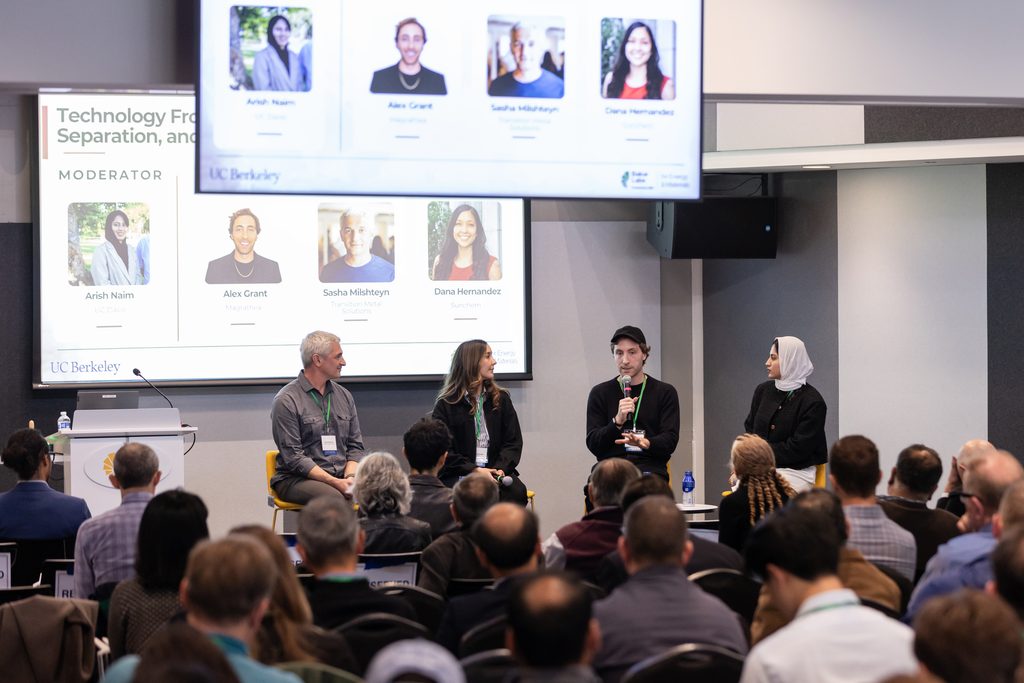
Panelists (from left to right) Sasha Milshteyn, Dana Hernandez and Alex Grant and moderator Arish Naim discussed the frontiers of technology in extraction, separation and recovery of critical minerals and materials. Photo by Brittany Hosea-Small.
The event featured speakers from deep tech startups, research, government and investment for a day of dialogue and networking
Industries and nations are caught in a desperate race for critical minerals. Necessary for everything from AI chips to energy production, these essential materials have become a strategic and economic flashpoint. But even the world’s largest governments and corporations have yet to figure out how to mine and process them sustainably and efficiently.
On October 27, Bakar Labs for Energy & Materials (BL-EM) convened the Strategic Horizons in Critical Minerals and Materials symposium to address the innovation stagnation impeding the critical minerals supply chain. The symposium brought together leading voices in research, entrepreneurship, investment and policy to tackle the challenge of securing these strategic treasures.
“Our pilot program is tackling a wide range of sectors across the energy and materials space. One of our companies, Transition Metal Solutions, is already innovating in the mining industry,” said BL-EM Director of Partnerships Shilpi Kumar. “This symposium helps us connect UC Berkeley with the broader conversation around innovation in critical minerals.”
The day centered around three primary pillars: complexity and interdependence across supply chains; modernization of antiquated mining and materials-processing technologies; and bridging the gap between government-scale investment and startup-driven disruption. Across six panels, the 165 attendees heard from leading voices from the public, private and academic spheres. A midday startup and technology showcase also gave 10 founders an opportunity to share their innovative companies with potential investors and thought partners.
As with all of the symposia Bakar Labs convenes, the ultimate goal was to catalyze urgently needed innovation that harnesses entrepreneurship for public good.
“One value shared by all Bakar Labs companies is the mission to address unmet needs in human and planetary health,” said Bakar Labs Director Dave Schaffer. “Our symposia bring together innovators, investors and policy-makers to identify new solutions to these challenges.”
Geopolitics, federal strategy & supply chain security
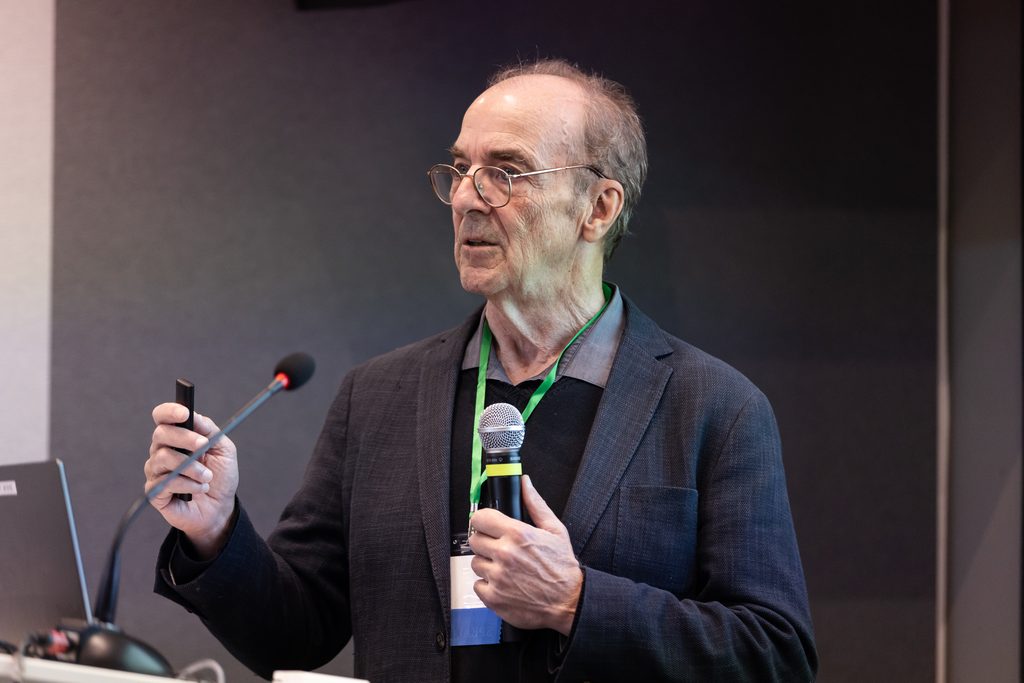
Douglas Wicks delivered the symposium’s opening remarks. Photo by Brittany Hosea-Small.
In his plenary address, former ARPA-E Program Director Douglas Wicks explained how the critical minerals supply chain consists of multiple industries that have suffered from stagnant innovation over the preceding decades. From mining to metal processing, Wicks showed enormous gaps in mass adoption of breakthrough technologies.
“Since the 1970s, no major new processing technique has impacted the market,” Wicks said.
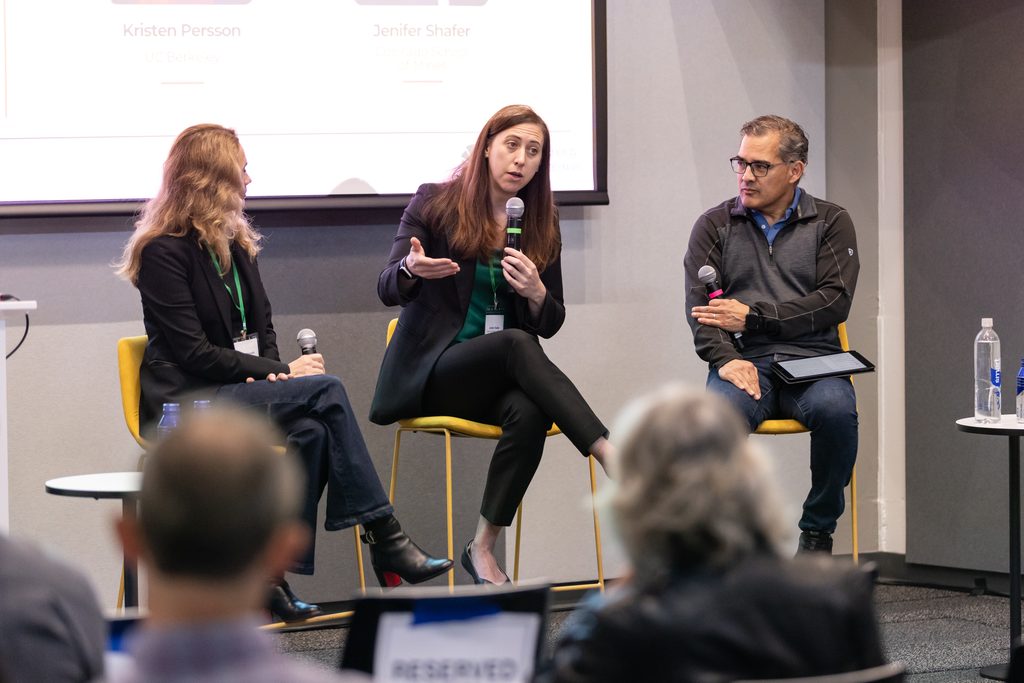
Panelists (from left to right) Kristin Persson and Jenifer Shafer and moderator Dave Schaffer explored the roles of geopolitics, federal strategy and supply chain security. Photo by Brittany Hosea-Small.
The day’s keynote panel addressed the position critical minerals occupy at the intersection of economic security, industrial strategy and global geopolitics. Panelists examined federal priorities, supply chain resilience, stockpiling, friendshoring and the reality that critical minerals supply chains remain globally interconnected.
The panel, moderated by Schaffer, included Kristin Persson, a professor in UC Berkeley’s Materials Science and Engineering department and Jenifer Shafer, a professor in the Chemistry Department and Nuclear Science & Engineering Program at the Colorado School of Mines.
The panelists discussed the fractured critical minerals regulatory landscape in the US and the challenge it poses to ramping up domestic supply chains. One solution, Shafer proposed, would be the creation of a government office that had broad responsibilities across multiple key industries, similar to the US Bureau of Mines, which was abolished in 1996.
“You need to reinstitute some sort of centralized office that manages this,” Shafer said.
Bringing more of the critical minerals supply chain within our borders also makes environmental sense, Persson said. Most critical minerals extraction and processing is currently outsourced to nations with lower cost barriers and fewer environmental regulations. Ramping up these processes in the US, with its higher environmental standards, could help limit pollution, a problem with global ramifications. “Pollution isn’t local,” Persson said.
Mineral sources, availability & resource constraints
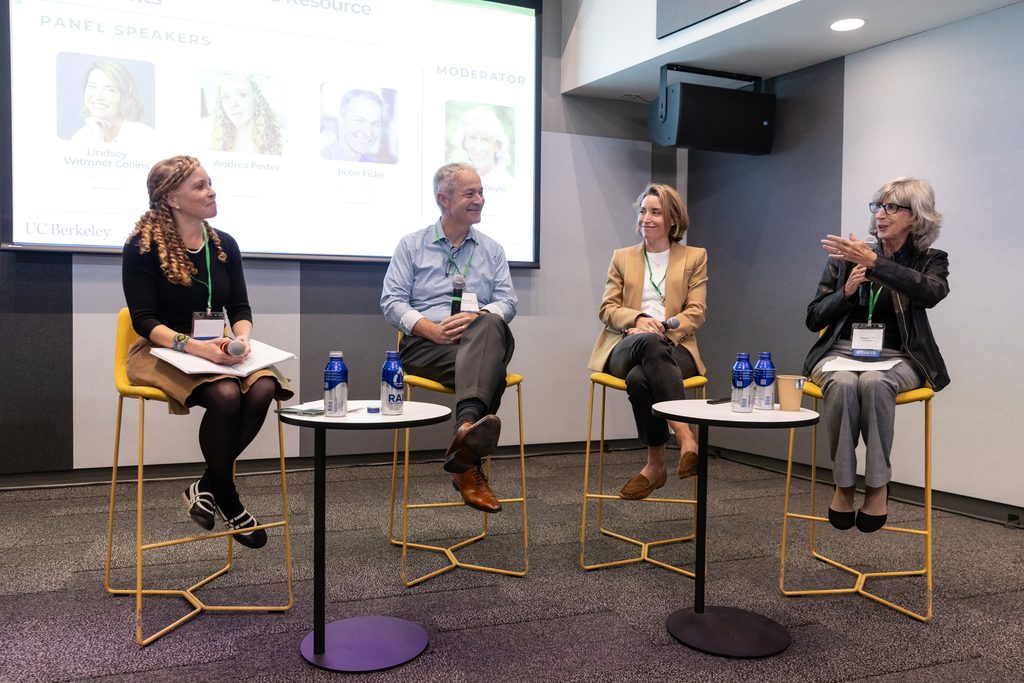
Panelists (from left to right) Andrea Foster, Peter Fiske and Lindsey Witmer Collins and moderator Fiona Doyle addressed mineral sources, availability and resource constraints. Photo by Brittany Hosea-Small.
The symposium’s second panel explored how the choice to adopt new extraction or processing technologies depends on the source material and its form, such as ores, geothermal brines or recyclables. The panel, moderated by UC Berkeley professor of materials science and engineering Fiona Doyle, included Lindsey Witmer Collins, CTO of GridMine; Andrea Foster, a research geologist at USGS; and Peter Fiske, Engagement and Technology Translation Manager with the National Alliance for Water Innovation.
Mineral sources were discussed not only as physical materials but also through economic and political lenses. “The definition of an ore is economic,” Doyle explained. “It’s the accumulation of a material that can be developed economically.” A reality that changes over time, Doyle added.
Panelists also discussed the often prohibitive financial barrier startups face to enter markets where the capital necessary for scale-up can number in the hundreds of millions of dollars. This early period of financial scarcity for startups is known as the Valley of Death.
“The bathymetry of the Valley of Death in resource recovery is particularly acute,” Fiske said while addressing the government’s role in supporting startup pilot projects. “And the Marianas Trench of that is where we have our first major project. And project financing is murderous. It murders good ideas. It murders projects because you are exposed over a series of years and market cycles.”
Technology frontiers in extraction, separation & recovery
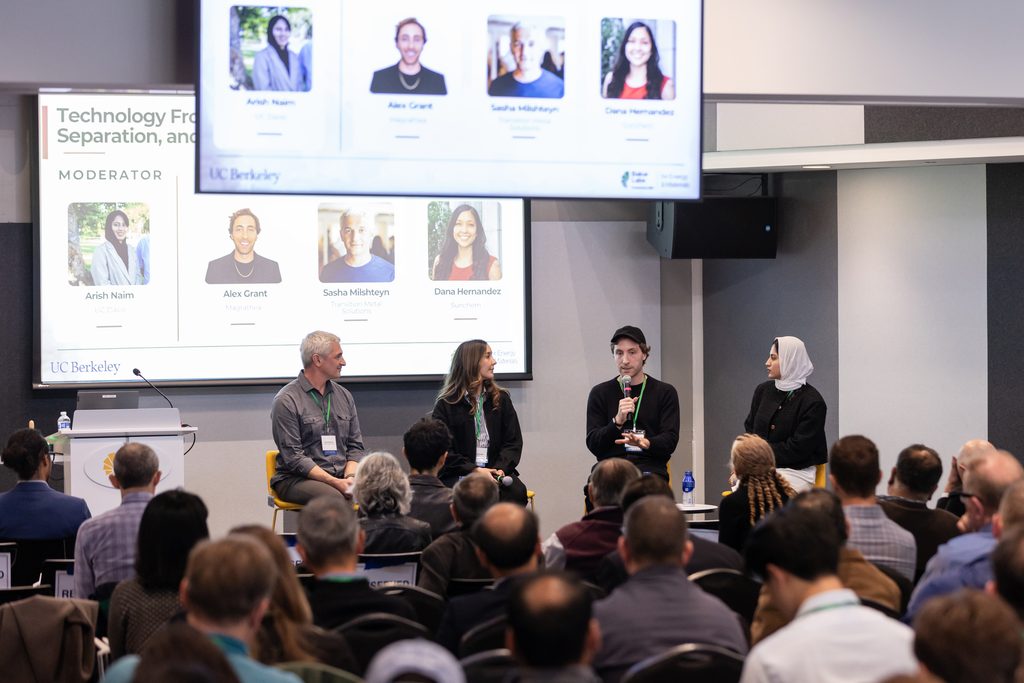
Panelists (from left to right) Sasha Milshteyn, Dana Hernandez and Alex Grant and moderator Arish Naim discussed the frontiers of technology in extraction, separation and recovery of critical minerals and materials. Photo by Brittany Hosea-Small.
The next panel focused on the technologies that can materially change the cost curve for critical minerals industries. The panel’s moderator, UC Davis materials scientist Arish Naim, opened the discussion with a question: “What breakthrough technologies could deliver a five-to-ten-fold cost advantage or significant operational improvement that would make adoption inevitable?”
Panelists included Sasha Milshteyn, CEO of BL-EM tenant company Transition Metal Solutions; Alex Grant, CEO of Magrathea; and Dana Hernandez, CTO of Sunchem. All three agreed that startups face a massive hurdle when convincing investors that a technology can scale from a $10 million bet to a $100 million investment. To clear this hurdle, investors, industry leaders and policymakers will need to build a bridge to carry startups safely across the Valley of Death.
“There needs to be coherent thinking about this problem,” Milshteyn said. “You can’t just develop technology in a vacuum, but at the same time, you can’t create a market without existing technology. So, when you’re thinking about how to build these programs, you really need to put together all of these pieces that are integrated.”
Domestic resilience & corporate partnerships
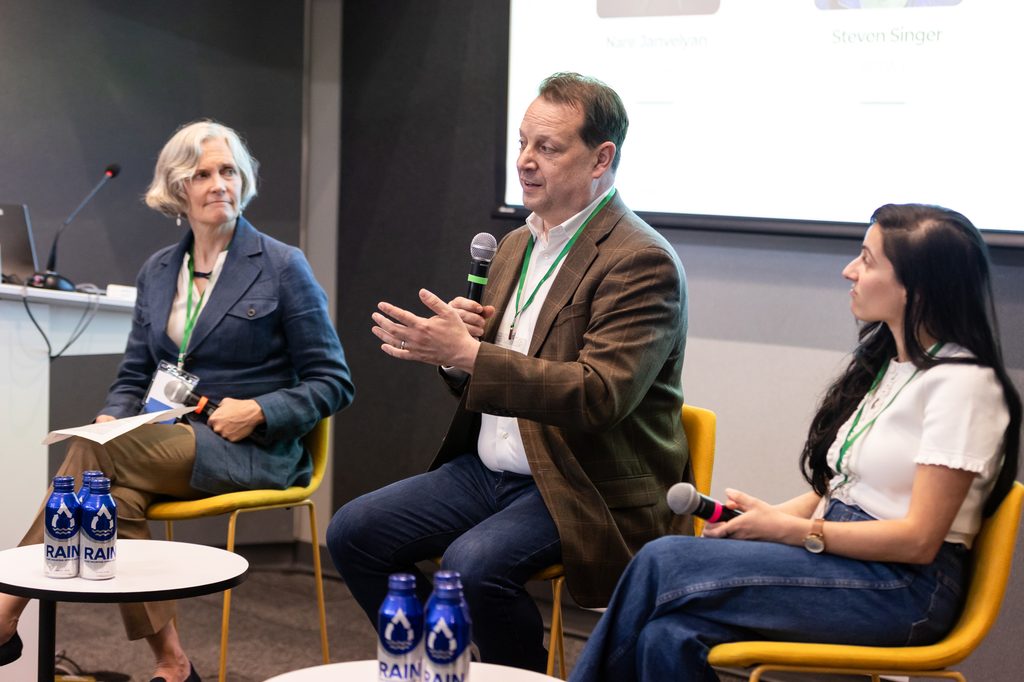
Moderator Susan Gladwin and panelists (from left to right) Steven Singer and Nare Janvelyan spoke to domestic resilience and corporate partnerships. Photo by Brittany Hosea-Small.
Moving from promising technology to commercial deployment requires more than venture capital. The fourth panel of the day examined the role of federal programs and large buyers in creating credible demand and reducing investor uncertainty. The panel, moderated by former DOE Senior Advisor Susan Gladwin, included Nare Janvelyan, principal at Voyager and ARPA-E Program Director Steven Singer.
Government investment in startups, Singer explained, can play a role in reducing investor uncertainty by proving a financial case for new technologies in sectors where large-scale innovation has stagnated. These investments, he said, can be done “in a way that signals to the private market that these are investable technologies.”
Janvelyan explained how Voyager divides a startup’s risk profile into technology risks, market risks and supply chain risks. A company demonstrating risks across multiple of these categories is unlikely to receive investment, she said. “We try not to stack risks.”
Capital & scale-up
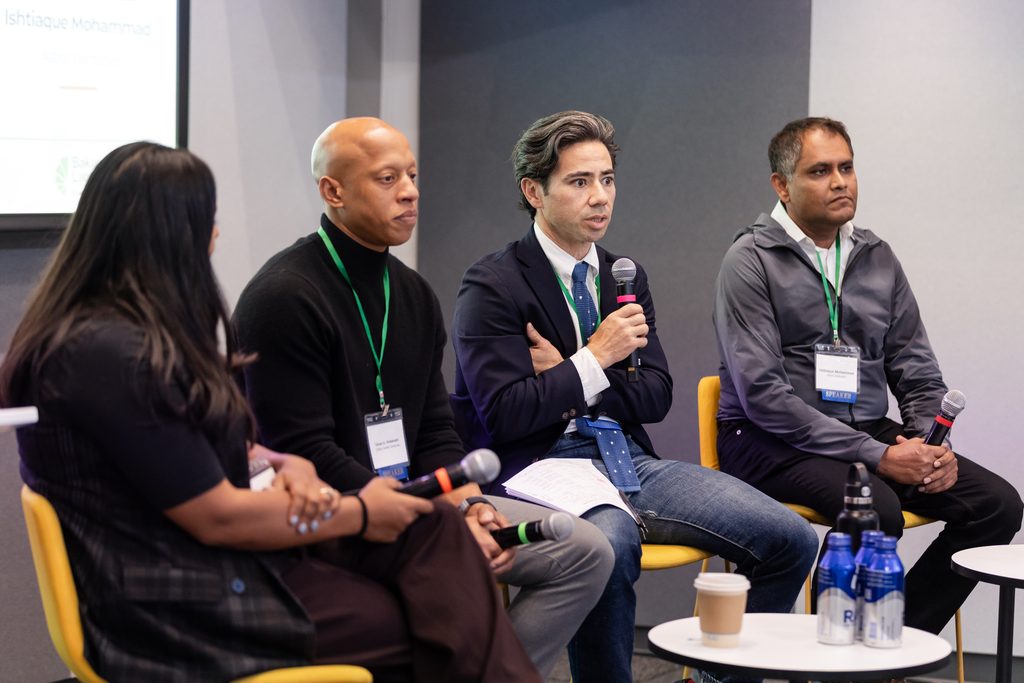
Moderator Shilpi Kumar and panelists (from left to right) Usua Amanam, Robert Allen and Ishtiaque Mohammad discussed capital and scale-up. Photo by Brittany Hosea-Small.
Critical minerals technologies often require significant capital and long development timelines. In a panel moderated by BL-EM Partnerships Director Shilpi Kumar, leading voices in venture discussed how they evaluate investment opportunities, from technical validation to first-of-a-kind projects and scaled assets. The panel included Usua Amanam of Dolby Family Ventures, Robert Allen of Orogenyx and Ishtiaque Mohammad of Astra Ventures.
At a time of capital concentration and risk aversion, founders need to understand the key opportunities ventures are willing to take a risk on, Amanam said. Whether a fund is prioritizing investments in defense, national security, AI or other opportunities, “it’s always important to understand the motive behind the capital providers,” he added.
Allen also encouraged founders to not just tailor their business model to investors, but also to the end customers. “Don’t create a business model you think Sand Hill Road will like; create a business model you think your customer and Sand Hill Road will like.”
Strategic horizons on critical minerals
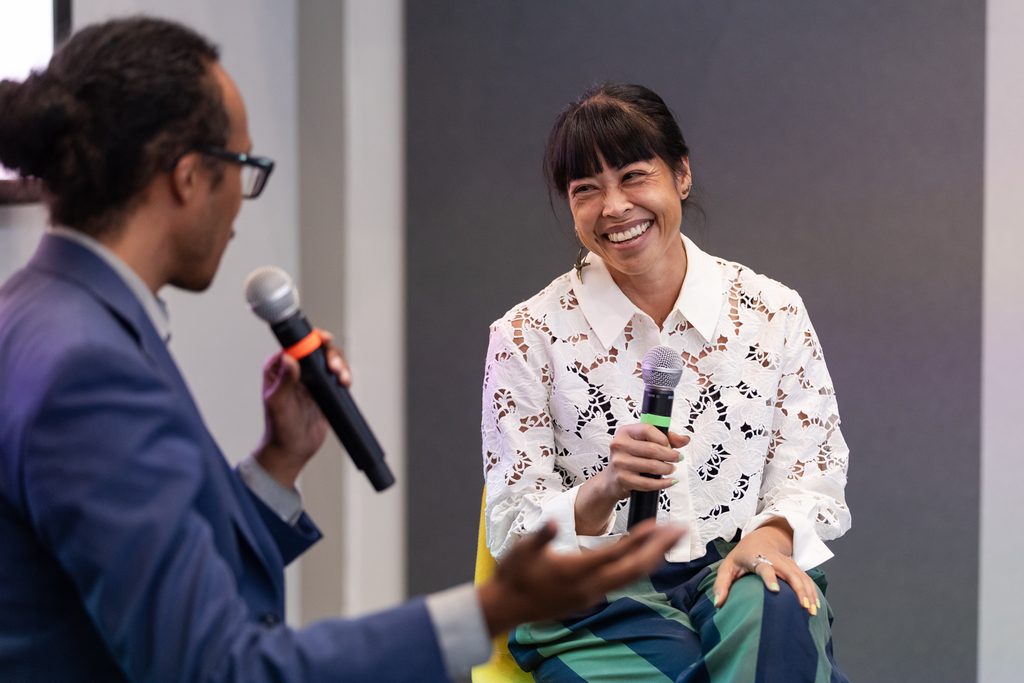
Moderator Ryan Taylor (left) and panelist France Tran (right) talked global perspectives on critical minerals. Photo by Brittany Hosea-Small.
The day’s panels ended with a fireside chat featuring Frances Tran, Research Director and Prize Designer at XPRIZE. During the discussion, moderated by BL-EM Innovation Navigator Ryan Taylor, Tran discussed how XPRIZE is attempting to bridge the gap between public investment and private capital by holding competitions around major unmet needs.
Taylor polled the crowd to find out what sort of technologies they would like to see future competitions geared towards. Hands around the room shot up, with audience members suggesting diverse technology gaps including seawater mineral extraction and nutrient reclamation.
Startup & technology showcase
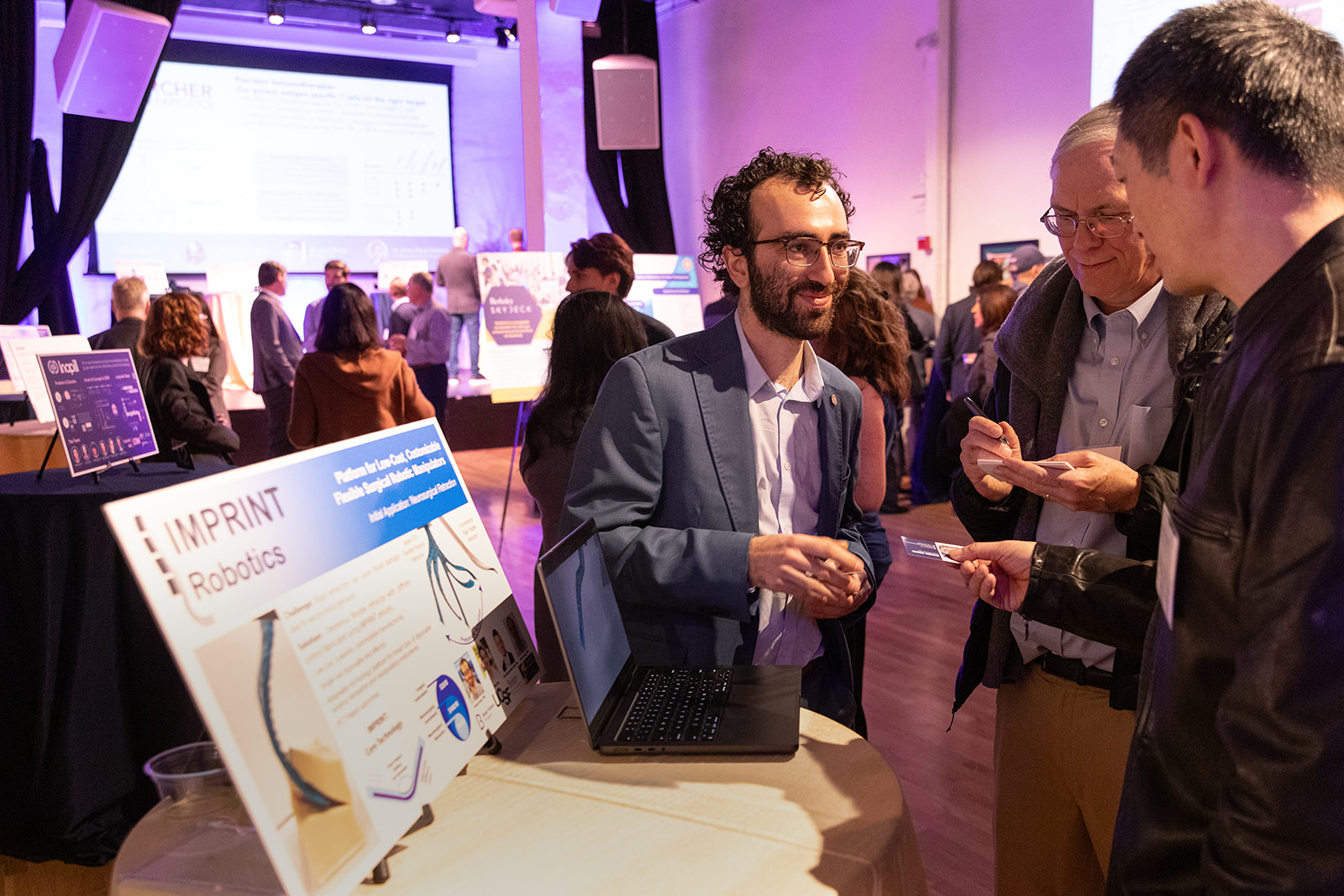
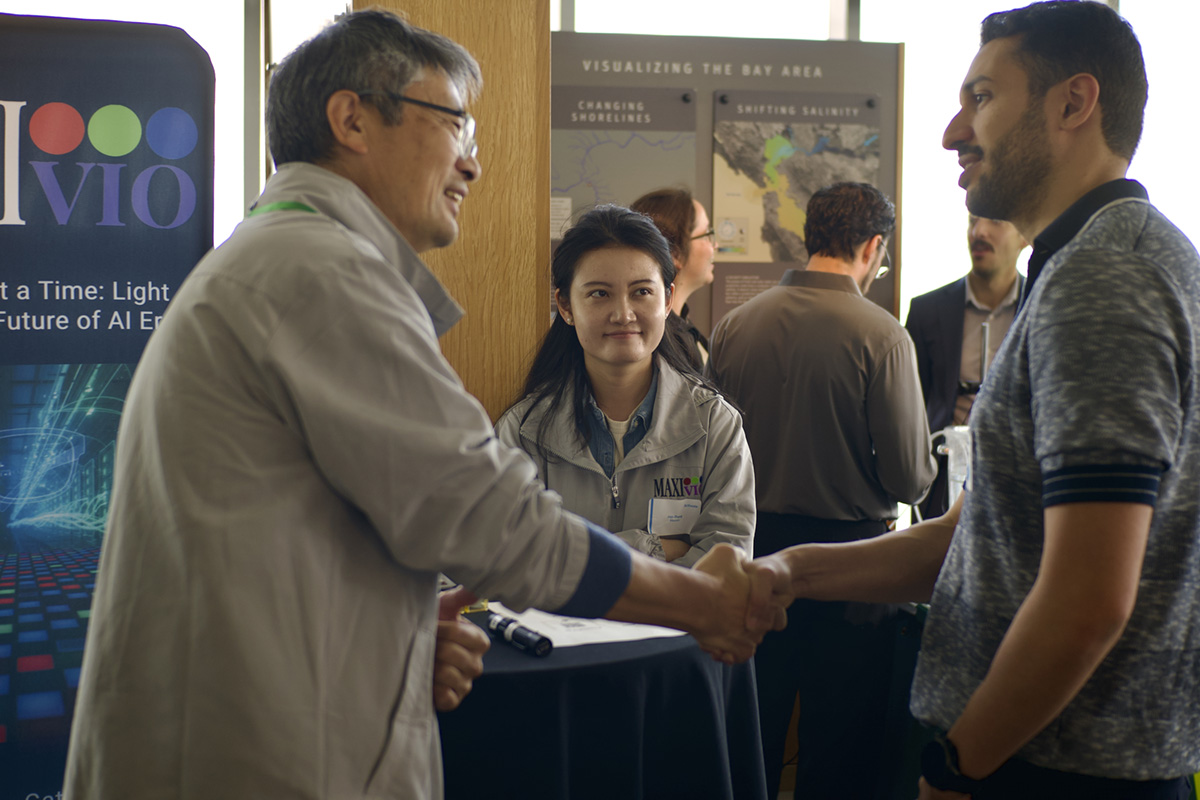
Startups showcased their innovative technologies to attendees. Photo by Brittany Hosea-Small.
During the afternoon lunch break, 10 startups showcased their companies to the symposium’s attendees. The companies spanned critical minerals industries, from biomining to wastewater recovery to metallization. Sasha Milshteyn, CEO of Transition Metal Solutions, took part in the symposium as a panelist, showcasing founder and attendee.
“This symposium did a great job of framing both the challenges of meeting domestic critical mineral supply needs and the hurdles founders face in bringing innovations to market,” Milshteyn said. “From funding to scaling and adoption. As a founder, I see events like this as essential for building a common understanding across government, academia, startups and private capital, necessary to build a coherent strategy to support innovation.”
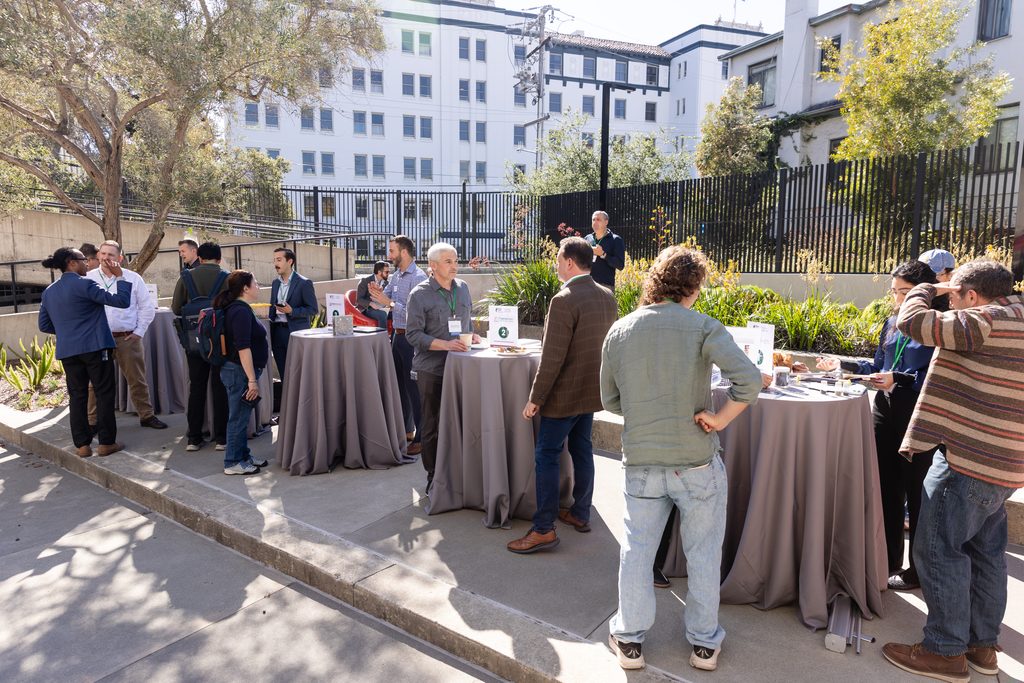
The day ended with the crowd mingling in the sunlit courtyard of the Bakar Bioenginuity Hub. Startup founders chatted with scientists from DOE and USGS. Investors carried on the day’s conversations with attendees from a range of companies and academic labs. This symposium was just the launchpad for future partnerships and innovations in sectors urgently seeking modernization.
“In 2028, we’ll be expanding Bakar Labs from the pilot program into a dedicated building for energy and materials startups,” Kumar said. “The new building will also be a convening spot for innovators at UC Berkeley and throughout the Bay Area. We’re planning to host more events like this one to connect research to industry across many technology sectors.”
The joint program, called GIA @ Bakar Labs, gives Singaporean startups access to Bakar Labs' world class biotech, energy tech and materials engineering incubator system. Companies will also gain access to Bakar Labs' network at UC Berkeley and beyond, and its ecosystem of investors, legal and business support throughout the Bay Area.
Read post
UC BERKELEY NEWS — The annual PitchBook rankings again showed how Berkeley's commitment to innovation and entrepreneurship operates at a scale unmatched by any other university.
Read post
The Hartford is partnering with the University of California, Berkeley’s Bakar Labs for Energy & Materials (BL-EM) to help startup companies who are developing next-generation energy and materials technologies. The insurer will support the initiative, as well as provide counseling, educational programming and other mentorship opportunities to its entrepreneurial tenants.
Read post
The Berkeley Innovation Zone on the west side of UC Berkeley -- between campus and downtown -- showcases how the City of Berkeley is working with the university to welcome and support entrepreneurs, in a cultural change that could ultimately bring in more revenue. BIZ includes two incubators currently under construction: IGI-Bakar Labs and Bakar Labs for Energy & Materials.
Read post